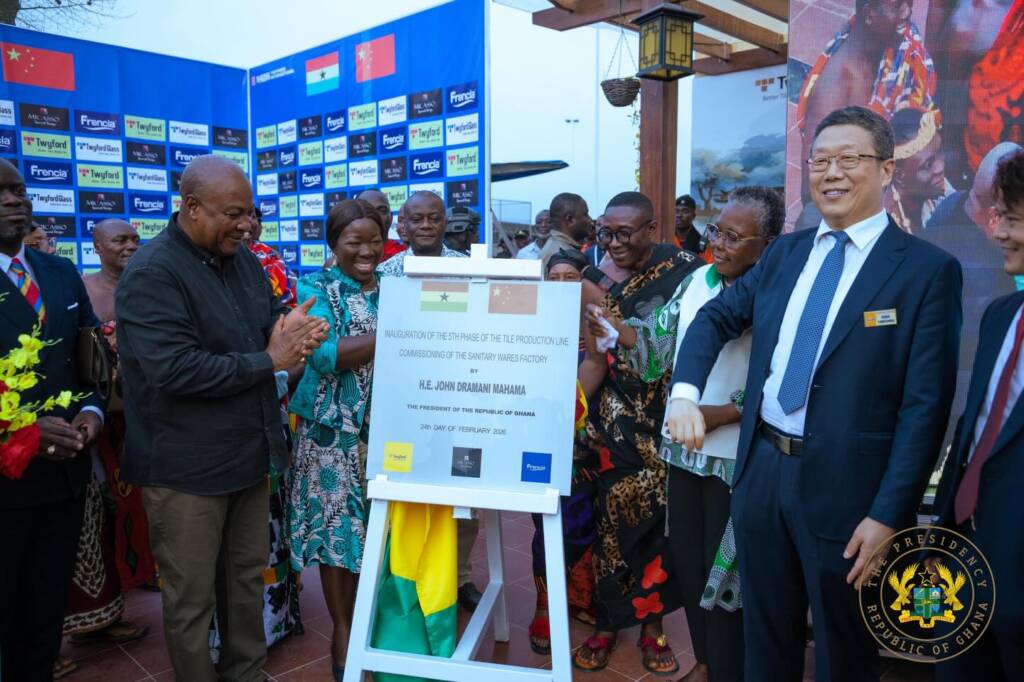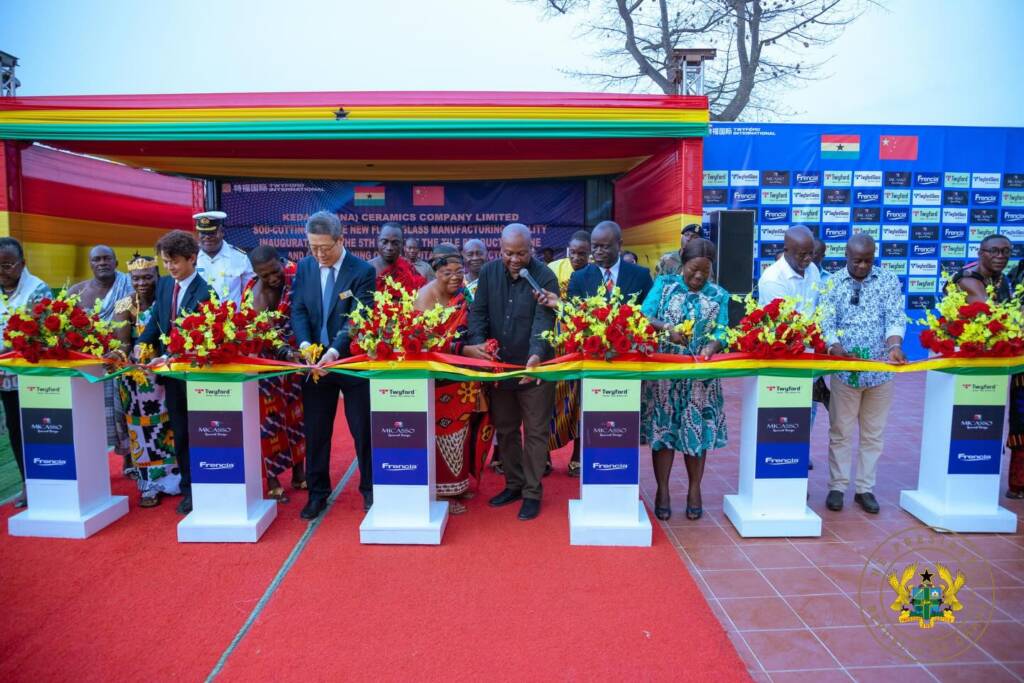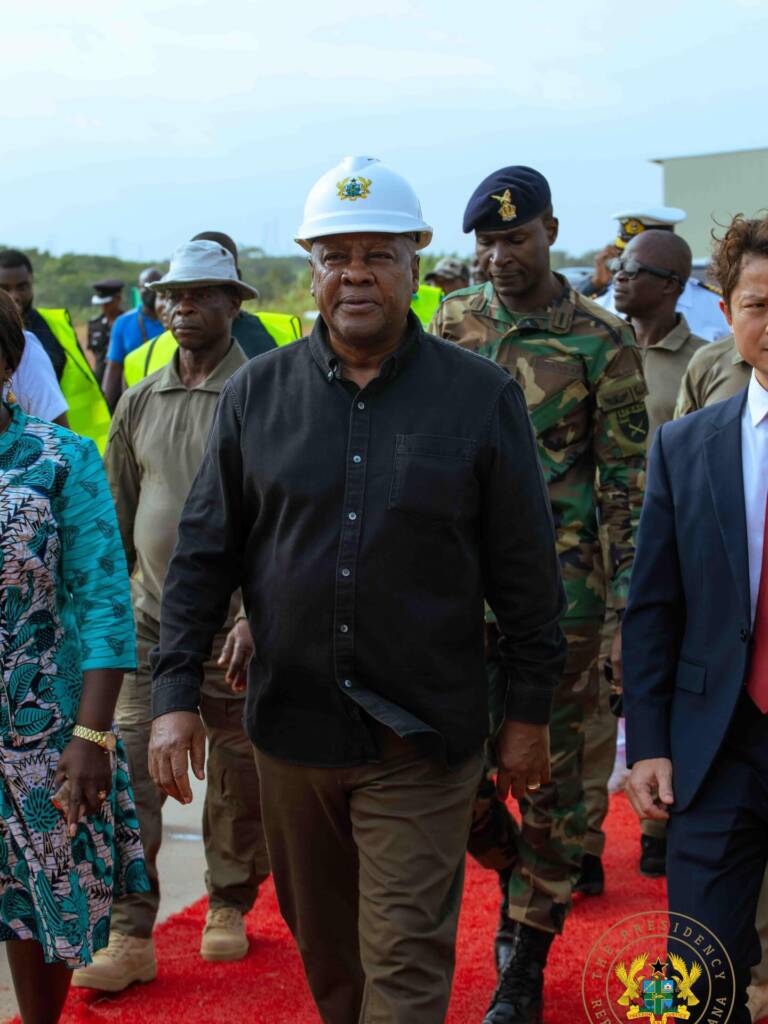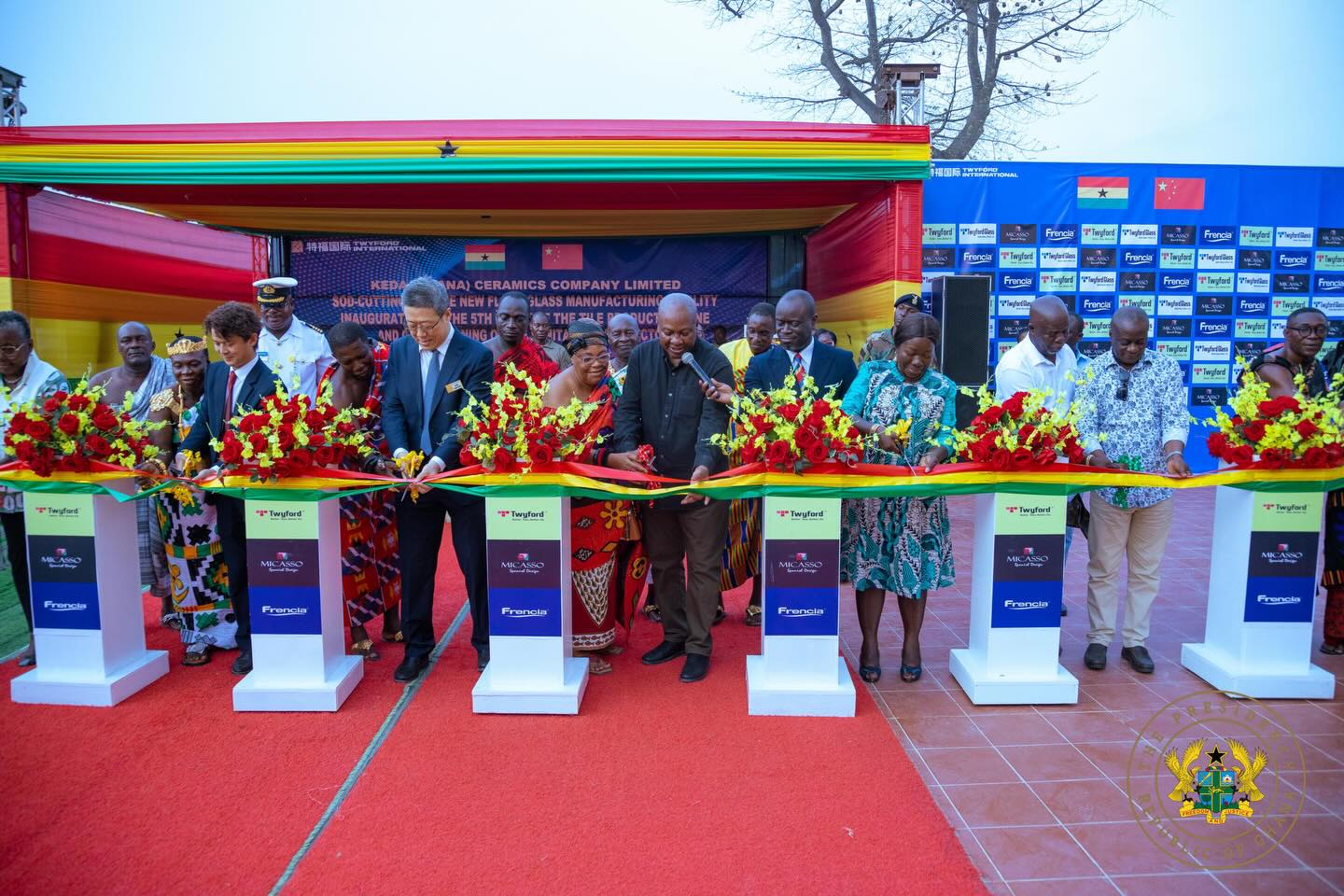
President John Dramani Mahama has officially cut the sod for the construction of a $250 million float glass manufacturing facility in Shama, Western Region, marking a major milestone in Ghana’s industrial transformation drive.
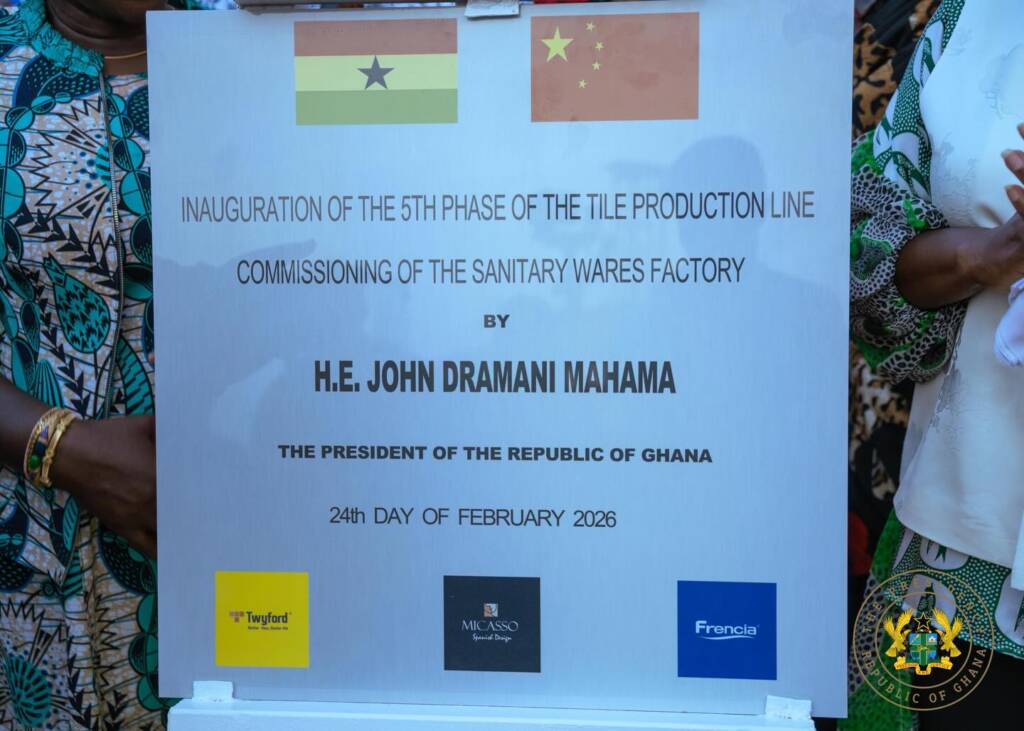
The groundbreaking ceremony on Tuesday, February 24, 2026, also saw the commissioning of a modern sanitary ware factory and the inauguration of the fifth phase of the ceramic tile production line by KEDA (Ghana) Ceramics Company Limited, underscoring the company’s expanding footprint in the country’s building materials sector.
President Mahama described the glass project as clear evidence that Ghana’s industrial resurgence is underway and that the country is determined to move away from being predominantly an importer of construction materials. “This is a statement that Ghana is no longer content to remain an import‑driven economy,” he said, emphasizing the government’s focus on producing, processing, manufacturing, and exporting locally made goods.
When completed, the New Float Glass Manufacturing Company is expected to produce about 1,400 tonnes of glass per day, positioning it among the largest float glass facilities on the African continent. The project will be developed in two phases — with Phase One producing 600 tonnes daily and Phase Two adding another 800 tonnes — and is designed to significantly reduce Ghana’s reliance on imported glass.
Officials say the facility will help cut the country’s glass import bill, which exceeded 65,000 tonnes in 2024, while also generating an estimated $100 million in annual export earnings once fully operational. Strengthening local supply chains and supporting sectors such as construction, automotive, and manufacturing are among the key economic benefits anticipated from the investment.
The project is also expected to create thousands of jobs, with more than 2,000 direct positions during construction and operation, alongside broader indirect employment opportunities. Skill‑transfer programmes aim to ensure Ghanaian engineers, technicians, and managers play leadership roles within the facility.
President Mahama said the investment aligns with Ghana’s national industrial strategy and the broader goals of the 24‑Hour Economy initiative, which seeks to enhance productivity, boost exports, and attract investor confidence. “Production and value addition are what build a strong economy,” he stated, emphasizing the role of manufacturing in national development.